
Straight To The Point
-
Patients aren’t rejecting healthcare. They’re rejecting care that doesn’t work for them.
-
When a system asks for patience without offering control, people don’t push back, they route around it.
-
Fixing the whole system starts with creating solutions for individual patients.
Here’s the thing: Across the healthcare landscape, patients are arriving at the same conclusion: waiting is a waste of time.
For decades, care was organized around institutional timelines. Intake forms. Referral loops. Weeks between appointments. But life doesn’t wait. Patients are living at the speed of their lives, sometimes while holding a puking baby, as I was the other night. (She’s better now, thank you. I wish I could say the same for my blouse.)
When a system asks for patience without offering control, people don’t stage a revolt. They find a workaround. That’s the moment healthcare leaders are in right now whether they like it or not.
What We See
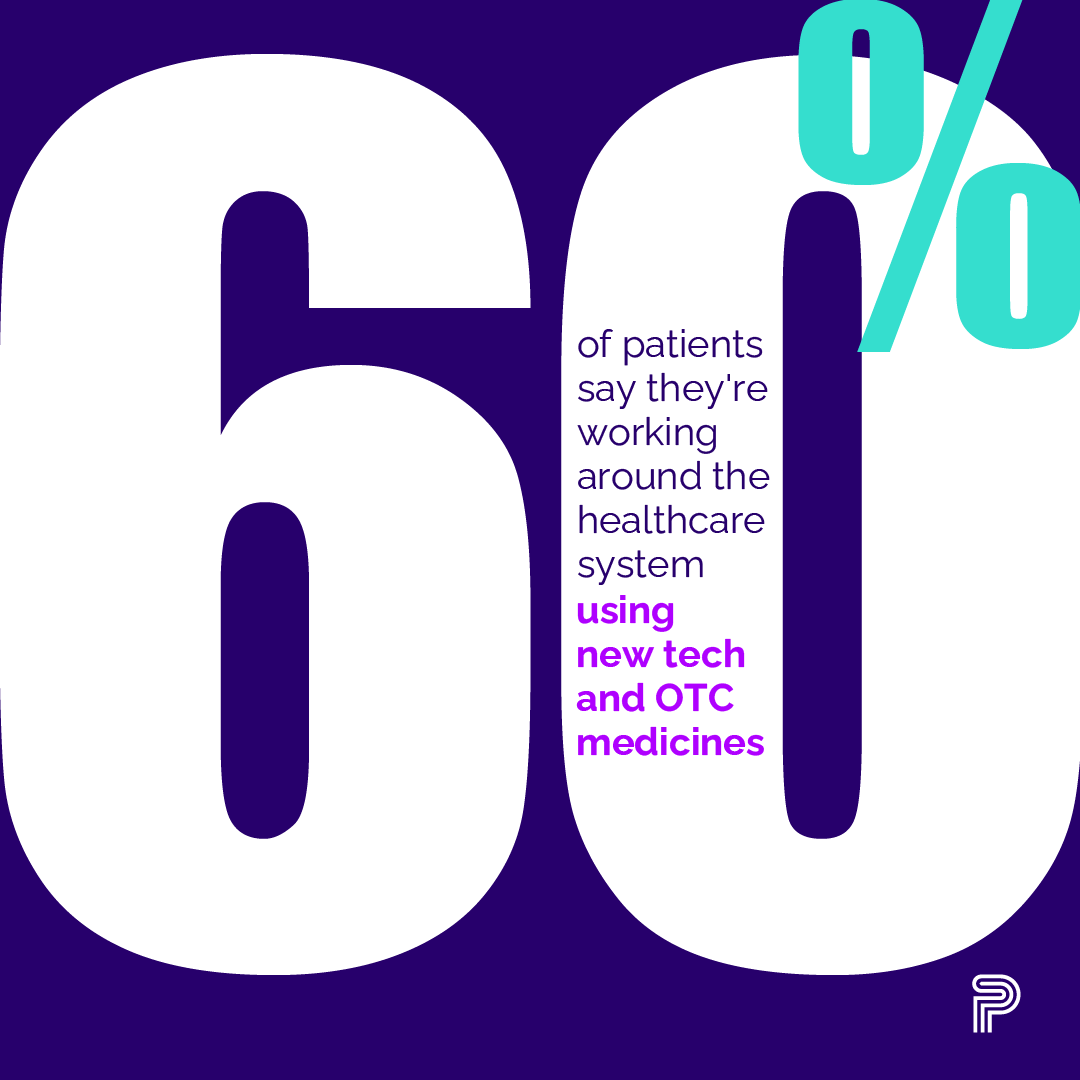
Patients haven’t walked away from care. But they have changed how they get it.
Instead of moving neatly through traditional pathways, patients are turning to at-home diagnostics, wearables, AI tools, and self-directed options, often before the healthcare system even knows they’re shopping around.
And this isn’t a generational rebellion or some Silicon Valley fad. Healthcare populism cuts across age, ideology, and political identity. The unifying factor isn’t suspicion of institutions, it’s frustration with them moving too slow for modern life.
Our latest research explores how widespread this shift has become and what it signals for healthcare leaders navigating a new era of patient control. [Read the full report here.]
What It Means
This moment is often diagnosed as a collapse in trust. But that’s overly simplified and doesn’t tell the whole story.
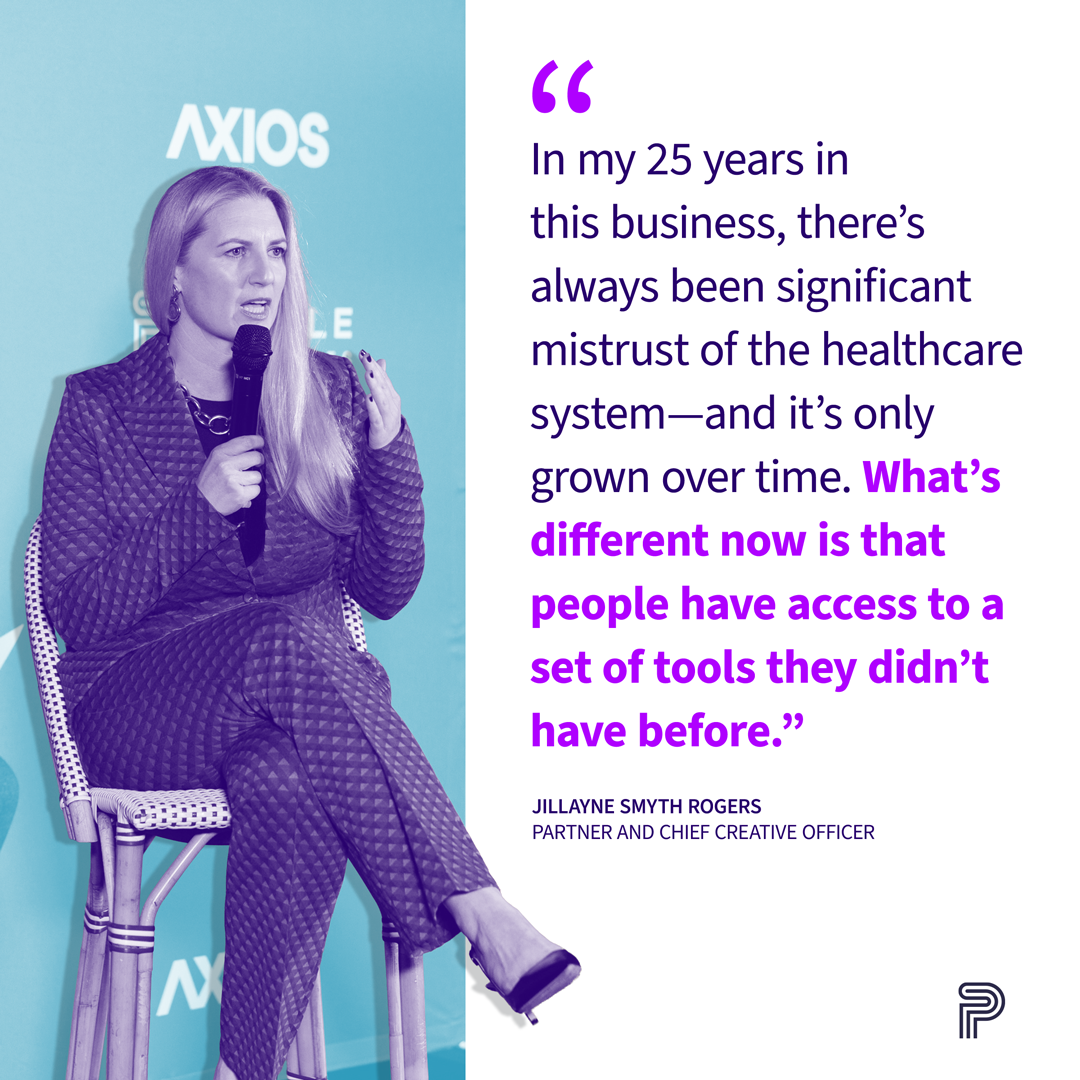
What we’re seeing is a rebalancing of control. Patients haven’t become anti-institutional; they’ve become practical. When systems feel slow, opaque, or misaligned, people seek out tools to keep moving. The instinct itself isn’t new. People have always wanted control over their health.
What is new is the toolset—one robust enough to let patients act without waiting for permission.
I recently discussed this shift at Axios Live, because healthcare leaders are now managing a parallel care experience, one that runs alongside the system, not outside it. That parallel track is reshaping expectations in ways that won’t snap back. Organizations built on assumptions of patience, loyalty, and linear journeys are suddenly competing with experiences defined by immediacy, visibility, and control.

What To Do
The response to this moment cannot be to ask patients to slow down or trust harder.
At Purple Strategies, we spend our time in exactly these moments, when public sentiment, politics, and behavior are moving faster than institutions were designed to handle. Our work lives at the intersection of reputation, advocacy, and strategy, helping leaders understand not just what is changing, but why.
Patients are telling us, through their choices, that momentum and control now matter as much as clinical expertise. This is a healthcare populism era. And the rules are different.
Here are the shifts leaders need to make:
Stop talking “system.” Start talking “you.”
Patients don’t want institutional promises. They want solutions that feel personal, adaptive, and built for real lives. Frame offerings as tools. Emphasize choice. Make customization, not scale, the headline.
Don’t fight skepticism. Use it.
Credibility comes from transparency and permission. Invite scrutiny. Encourage comparison. Be willing to say: Try it. See what works best for you.
Put AI to work, without removing humans.
Patients want speed and insight. They are also watching institutions carefully. Spell out benefits and risks. Show your work. And always leave a clear path back to a clinician when judgment matters most.
Lean into direct-to-consumer realities.
The goal can no longer be to funnel people through a dictated path Instead, equip them with tools, data, and optional paths they can assemble themselves.
Treat politics as context, not background noise.
Health decisions now carry political meaning. Segment by worldview. Be honest about who you can reach. Speak to MAHA priorities without borrowing MAHA branding.
The Bottom Line
The organizations that win in this next chapter won’t be the ones defending the old contract with patients. The winners will be the leaders who recognize what has already changed and actively decide to move with it.
Interpreting cultural moments like healthcare populism and turning them into strategic advantage is just one more way Purple can help leaders like you succeed.
 Your Earnings Call Just Testified Before Congress. Were You ...
  How can you hit the bullseye during the big game without bec...
  Washington’s New Normal: Why the Old Advocacy Playbook No Lo...